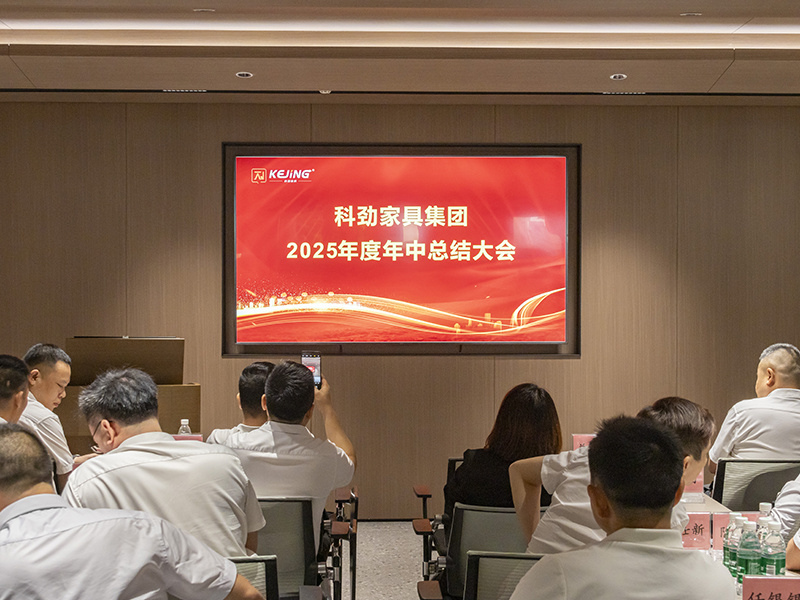

Conference space furniture upgrade: Modular design adapts to diverse settings, breaking the boundaries of traditional office spaces.
2025-08-28
In the context of continuously evolving office environments, meeting spaces are no longer simply "discussion areas"—they’ve become central hubs that seamlessly integrate collaboration, presentation, and communication into a single, multifunctional zone. This transformation has directly fueled innovation in the design of meeting room furniture. Traditional fixed-length conference tables and immovable seating are gradually being replaced by modular, flexible furniture that can be easily disassembled and reconfigured—reflecting the emerging trend shaping today’s workplace dynamics.
Take the conference table as an example: the new generation of modular products features a "modular, connect-and-combine design," allowing basic units to be freely arranged according to the scale of the meeting. For smaller gatherings of 3 to 5 people, tables can be joined together into either square or round configurations, ensuring equal visibility for all participants and facilitating seamless interaction. Meanwhile, larger meetings with 20 or more attendees can be configured into elongated or tiered layouts, paired with adjustable-height legs that adapt effortlessly to varying ceiling heights and room sizes. Some models even come equipped with concealed cable channels beneath the tabletop, neatly routing wires from projectors, microphones, and other devices—eliminating clutter that might disrupt the meeting experience. Additionally, these tables support integrated wireless charging modules, enabling attendees to power their electronic devices without needing to carry charging cables, thus addressing the common frustration of "charging anxiety" during traditional meetings.
The design of the seating also emphasizes "scene adaptability." In addition to traditional conference chairs, lightweight, foldable, and stackable options are increasingly becoming complementary choices—perfect for situations where meeting spaces need temporary expansion. These chairs can be quickly unfolded when needed and easily folded away afterward, taking up minimal space and preventing permanent occupancy of the area by fixed seating. Some models even come equipped with 360-degree swivel functionality and adjustable armrests, allowing participants to effortlessly adjust their posture during long meetings, thereby reducing strain on the back and neck. For hybrid online-and-offline meeting scenarios, certain chairs feature quiet, omnidirectional casters, enabling attendees to move seamlessly between virtual participation zones and physical discussion areas—without disrupting the meeting flow with unwanted noise.
Additionally, storage furniture in meeting spaces is also showing a trend toward "functional integration." Previously separate elements like filing cabinets and display racks are now seamlessly integrated with conference tables and wall systems: for instance, hidden drawers beneath the table provide discreet storage for meeting materials, stationery, and other essentials, helping to keep desks tidy; meanwhile, walls are fitted with adjustable shelving units and magnetic storage boxes, which not only showcase project plans and data charts but also offer convenient spots to temporarily store attendees' personal belongings. This "furniture-and-space fusion" design not only enhances the clean, organized look of meeting areas but also minimizes clutter by reducing the need for extra furniture, leaving more open, airy space behind.
From the perspective of practical application, the flexible configuration of meeting furniture has already demonstrated significant value. Data from a survey of office spaces reveals that venues equipped with modular meeting furniture have seen space utilization increase by more than 30%, while meeting preparation time has been cut nearly in half—what once took an hour to set up for a large-scale meeting can now be completed in just 20 minutes through simple modular assembly. Meanwhile, attendees have reported markedly higher satisfaction with the overall meeting experience, particularly in areas such as "ease of interaction," "device compatibility," and "spatial comfort," where ratings improved by as much as 40% compared to traditional meeting spaces. This furniture design, centered around "scenario-specific needs," is redefining the functional boundaries of meeting spaces—and paving the way for more adaptable, flexible solutions that enhance collaborative work environments.
Latest News